
GLASS AUDIO | VALVE NOTES
Glass Audio newsletter | Issue 1 | September 2026
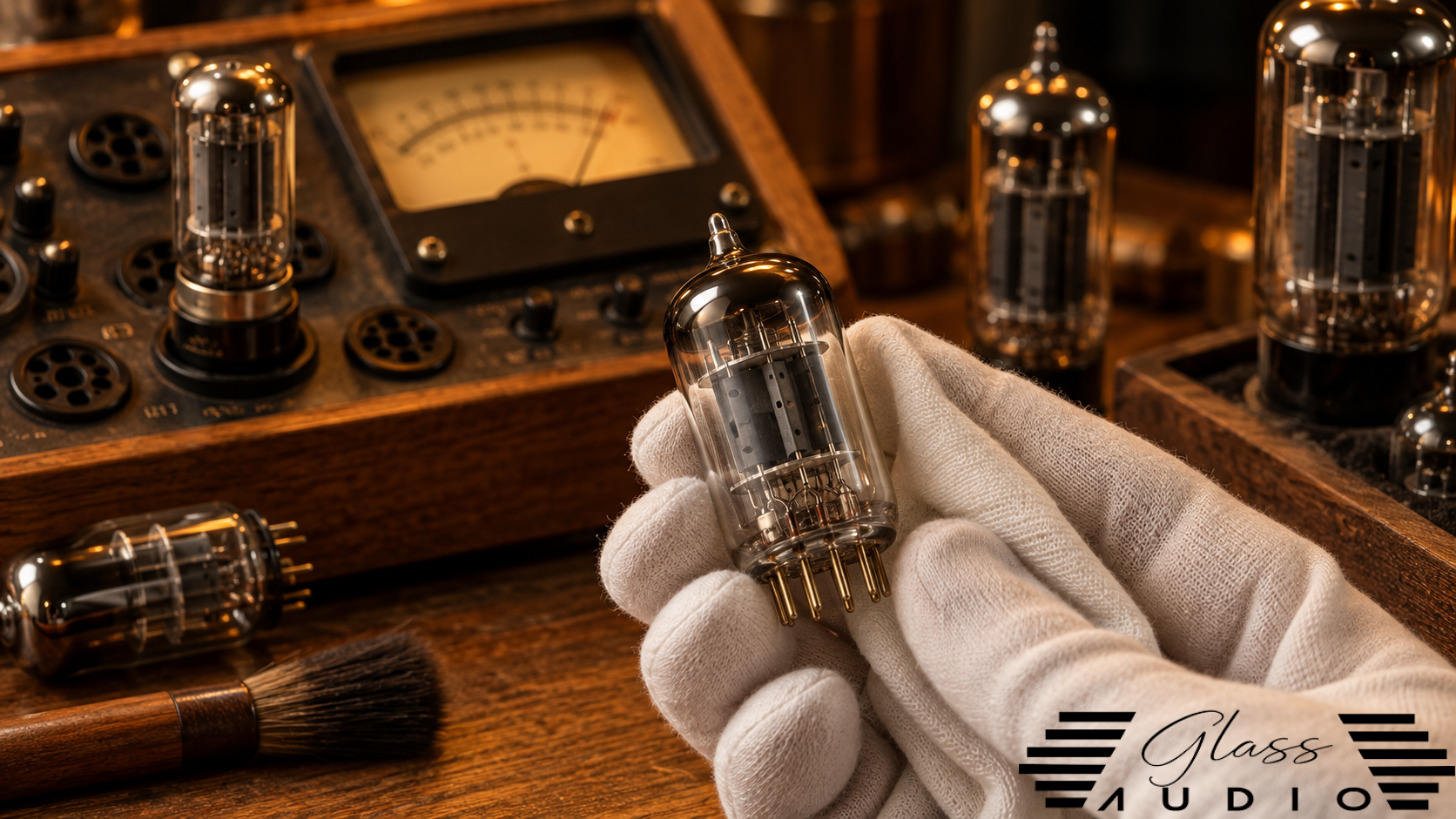
A valve is not merely a glowing ornament. It is an active component, and the right replacement begins with the circuit.
This issue answers the questions that appear again and again in public hi-fi conversations: Can I substitute this valve? Will a different brand change the sound? Why is one channel noisy? The short answer is that safe compatibility comes first; sound preferences come second.
The quick rule before buying
Use the exact valve type specified by your amplifier manufacturer unless its manual or a competent technician confirms an approved equivalent. A similar-looking valve, or one with a familiar name, is not automatically safe or compatible. Power valves and rectifiers can affect voltages, heat and bias.
Safety note: valve amplifiers can retain dangerous stored high voltages even after they are switched off. Do not open an amplifier or touch internal parts unless you are trained to work safely on valve equipment.
Questions and answers from the valve bench
Q Can I replace a 12AX7 with a 12AU7 or 12AT7?
A Not as a casual swap. These valves share a base and may physically fit, but they have different gain and electrical characteristics. Some designs deliberately allow a substitute in a particular position; others do not. Check the manual, schematic or ask a qualified technician before changing the type.
Q Do different brands of the same valve really sound different?
A They can, but start with a working, compatible valve. Construction, age, testing condition and the amplifier circuit all matter. The practical result may be lower noise, different gain, a slightly different tonal balance or no meaningful change at all. Buy from a seller who identifies the exact type and test condition rather than chasing a label alone.
Q Must output valves be matched?
A For a push-pull power amplifier, matched output valves are generally recommended. Matching helps both sides of the output stage operate similarly and can reduce imbalance. Replace a pair or full set when the manufacturer or technician recommends it. A single replacement is not automatically wrong, but it needs to be judged against the amplifier and the remaining valve.
Q What does microphonic mean?
A A microphonic valve reacts to vibration and turns it into unwanted sound. You may hear a ping through the speakers when the chassis is lightly tapped, or a ringing sound at certain volumes. Preamp valves are common suspects.
Q My amplifier hums. Is it always the valves?
A No. Hum can come from a valve, but also from a noisy mains supply, grounding, ageing capacitors, a transformer, cabling or a source component. First isolate the system: remove source inputs, try another outlet if appropriate, and note whether the hum changes with volume.
Q Do I need to bias new power valves?
A Many fixed-bias amplifiers require bias checking or adjustment after power-valve replacement. Some designs are self-biasing, but even then the correct valve type and healthy operating condition matter. Never assume that a new valve set can simply be plugged in and driven hard.
Q Can old NOS valves be better than new production?
A New Old Stock can be excellent, but age alone is not a quality certificate. A properly tested new-production valve may be the better choice for reliability and value. Look for clear testing information, honest grading and a seller who can explain what the valve is suitable for.
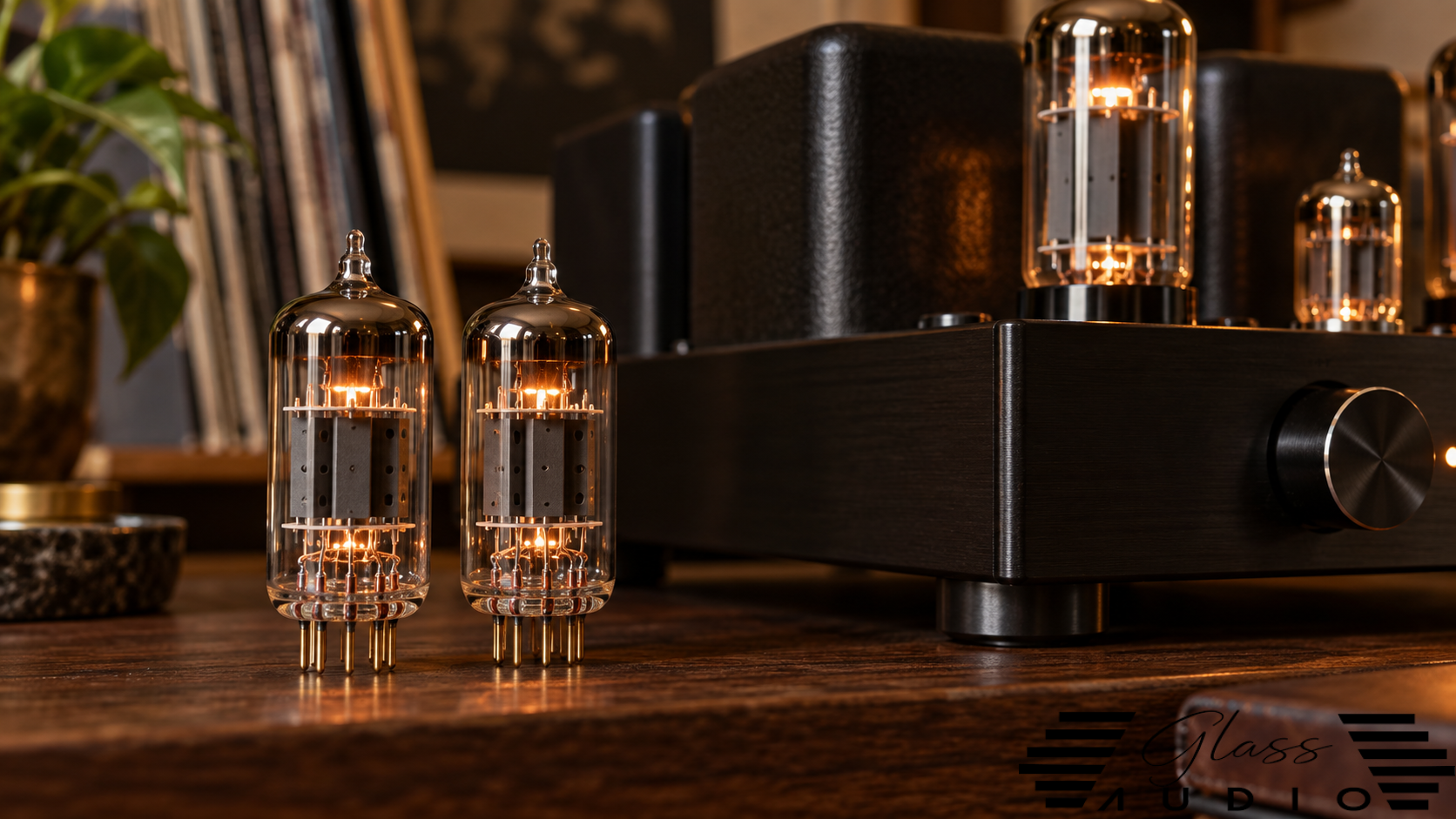
Handle valves gently, by their base where practical, and avoid forcing pins into a socket.
Five things to send before asking for a replacement
| Send this | Why it matters |
|---|---|
| Amplifier make and model | The same valve number can be used differently in different amplifiers. |
| Photo of the installed valves | It helps identify the positions and existing valve markings. |
| Exact wording on the glass | A suffix can be important: for example 12AX7, ECC83, 6L6GC or EL34. |
| The symptom | Noise, low volume, ringing, hum, red-plating or a dead channel point in different directions. |
| Whether work was done recently | A new valve, fuse, cable or repair may be relevant to the diagnosis. |
This fortnight at Glass Audio
Need help finding the correct valve? Send us the amplifier model, a clear photo of the valve markings, and the problem you are hearing. We will help you narrow down the right question before you spend money on a replacement.
Ask your question below. We may feature it anonymously in a future Glass Audio Valve Notes issue.
Glass Audio | Valves, vintage audio and practical advice