
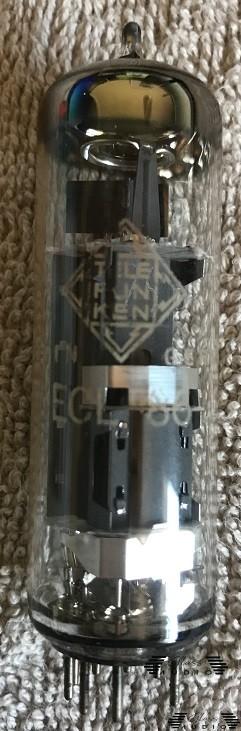
Description
ECL86 Telefunken: triode and output pentode
ECL86 Telefunken combines a voltage-amplifying triode and a power pentode in one envelope. It is a combination valve, not a double triode.
Manufacturer type-reference details
The Telefunken reference describes a triode and audio-output pentode with separate cathodes, using a nine-pin Noval base. It lists a 6.3 V heater at approximately 700 mA. The pentode maximum anode dissipation is 9 W: this is a heat limit for the electrode, not a 9 W audio-output rating or guaranteed amplifier output.
Original Telefunken ECL86 reference, hosted by BTB Elektronik; document issue date not established. These are historical type-reference details, not measurements of the valve offered. The brand in this listing does not by itself establish the original factory or production date; a reference from another manufacturer is identified as such.
Compatibility and condition
ECL86 is not an automatic replacement for ECL82, ECL83 or PCL86. Shared socket dimensions and a related number do not establish the same connections, heater requirements or bias. Use the exact manufacturer reference and amplifier service documentation.
This listing does not specify an unused-stock history, matched set or selected noise grade. Ask about the actual item and quantity required rather than inferring condition from brand or age. No individual life expectancy, low-microphonics result or tonal response is promised here.
Ordering and useful questions
Glass Audio tests valves before sale. Contact Glass Audio with the listing name, equipment model and quantity. International postage is calculated before quotation. Pretoria collection is by prior arrangement, Monday–Saturday, 08:00–17:00.
Does the socket prove compatibility? No. The circuit and complete manufacturer connection diagram must agree. Are published ratings individual test results? No. Read our datasheet guide for the distinction between reference conditions, limiting values and measurements.
Internal amplifier work requires a qualified technician because dangerous voltages can remain after disconnection.


Reviews
There are no reviews yet.